
How to Choose Flat Roof Repair Materials
Choosing the right flat roof repair material often feels confusing for homeowners, and we see it all the time. You try to fix one leak, and another shows up because the patch did not match the roof system or the product was not made for Florida weather.
At All Pro Builders & Roofing, we have spent more than 20 years repairing flat roofs in South Florida, so we know exactly how heat, humidity, and sudden storms can ruin the wrong materials. That is why it is so important to use products that actually work with your roof type and can handle our climate. In this guide, we explain which materials hold up and which ones fail early so you can choose repairs that last.

Start by Identifying Your Type of Flat Roofing
The first step to roof repairs is knowing exactly what system you are working with. If you put the wrong patching on the wrong roof system, the repairs can fail quickly or even make the problem worse. We see this often when homeowners apply thermoplastic polyolefin patches to a built-up roof or use asphalt on PVC membrane roofing. The patching simply will not bond, and the leak comes right back. Before choosing any product, make sure you know which flat roofing system you have. These are the most common types in Florida:
- Thermoplastic Polyolefin (TPO): A white, heat-welded single-ply membrane most often seen on commercial buildings and sometimes on upscale residential homes.
- Modified Bitumen (Mod Bit): An asphalt-based roll roofing system with a smooth or granulated surface. Common on residential homes because the granules can match the color of the sloped roof.
- Built-Up Roof (BUR): Multiple layers of asphalt with a gravel or cap sheet surface. It has a similar appearance to Mod Bit, and some maintenance materials can be interchangeable when properly matched.
- PVC: A single-ply membrane made from flexible polyvinyl chloride. It comes in different colors and is often used on restaurants or deck roofs designed for foot traffic.
- EPDM (Rubber): A black rubber membrane that is glued down or mechanically fastened.
- Coating Systems: Silicone, acrylic, or elastomeric top layers applied over an existing membrane roof to protect and extend the roof’s life.
Using patches or sealants that do not match your flat roof system will not bond properly and usually fail within one season.
What Causes Flat Roofs to Leak?
Flat roof leaks often come from weak points rather than the field membrane. Most problems start at seams, transitions, roof penetrations, clogged drains, or areas where water sits longer than 48 hours or improper installation. Heat and UV exposure in Florida speed up cracking, shrinkage, and seam separation. When these areas break down, moisture finds its way under the membrane and spreads through the insulation before showing up inside the building.
It is also important to do a thorough inspection before choosing any maintenance material. Flat roof leaks can travel a long distance through insulation, sometimes as far as 20 feet from where the water actually enters. This makes it easy to cover the wrong spot if you assume the leak is directly above the ceiling stain. If possible, check the attic or interior ceiling cavity for signs of moisture, rusted fasteners, or wet insulation. Finding the true source of the leak helps you choose the right solution and prevents the problem from coming back.

What to Check Before Choosing Materials
Before picking any patches or sealant, you need to understand what is actually happening on the roof. Maintenance materials fail when they are applied to the wrong problem or the wrong surface. Look for ponding water, open seams, clogged drains, blistered sections, and signs of moisture under the membrane. Most flat roof leaks start at the details, not the middle of the roof, so taking the time to inspect every transition helps ensure the materials you choose will actually work.
Inspect your roof for the following problems:
- Damaged flashings around pipes, walls, and penetrations
- Metal or rubber pulling away from a wall or penetration
- Hairline splits in the membrane that allow water to enter
- Seams that have come loose or lifted
- Ponding water and clogged drains
- Soft insulation or roof decking
Consider the Condition of the Roofing System Before You Patch
A flat roof that is severely aged or waterlogged will not respond well to small repairs. If the insulation is soft, seams are failing in multiple locations, or the membrane is cracking across large areas, patches may only last a short period. In cases like these, a restoration coating or a partial replacement may be a better investment than spot repairs.
Match the Repair Materials to Your Existing System
Every roof system has its own chemistry and bonding requirements. Thermoplastic polyolefin patches only bond to TPO. PVC requires PVC-specific materials. EPDM membrane roofing needs rubber primers and tapes. Mod Bit and Built-up need asphalt-based products. Silicone coatings only bond to silicone. Using a product that is not compatible with the roof type leads to peeling, soft edges, and repeated leaks. Making the correct match is the most important part of any repair.
A safe approach for simple repairs is to use silicone, since it can adhere to many different types of roofing systems. Just keep in mind that once you apply silicone, you cannot go back and use an alternative option on top of it later.
Evaluate the Size and Type of Repair Needed
A small puncture needs a very different solution than a separated seam or failing flashings. Surface cracks can sometimes be sealed with a compatible coating, but seams that are pulled apart require a much stronger fix. In most cases, you need to use the same membrane welded or bonded directly over the affected area to restore strength.
If you are working with a coating system, manufacturers provide specific steps for repairing seams before any coating is applied. Flashings, corners, and penetrations also need purpose-built flashing materials or full kits, not a simple patch. The right solution depends on the type of damage and the correct method needed to bring that roof section back to full integrity.
Think About Whether You Need a Temporary or Long-Term Repair
Some homeowners only need a temporary fix to stop active leaking until a full replacement is scheduled. Others want a long-term solution that will last years. Temporary fixes can include butyl tape or asphalt patching on compatible roofs, while long-term solutions require compatible, reinforced patches or full-area coatings. Being clear about your goal helps you choose a solution that fits your timeline and budget.
Best Repair Materials for Each Flat Roof Type
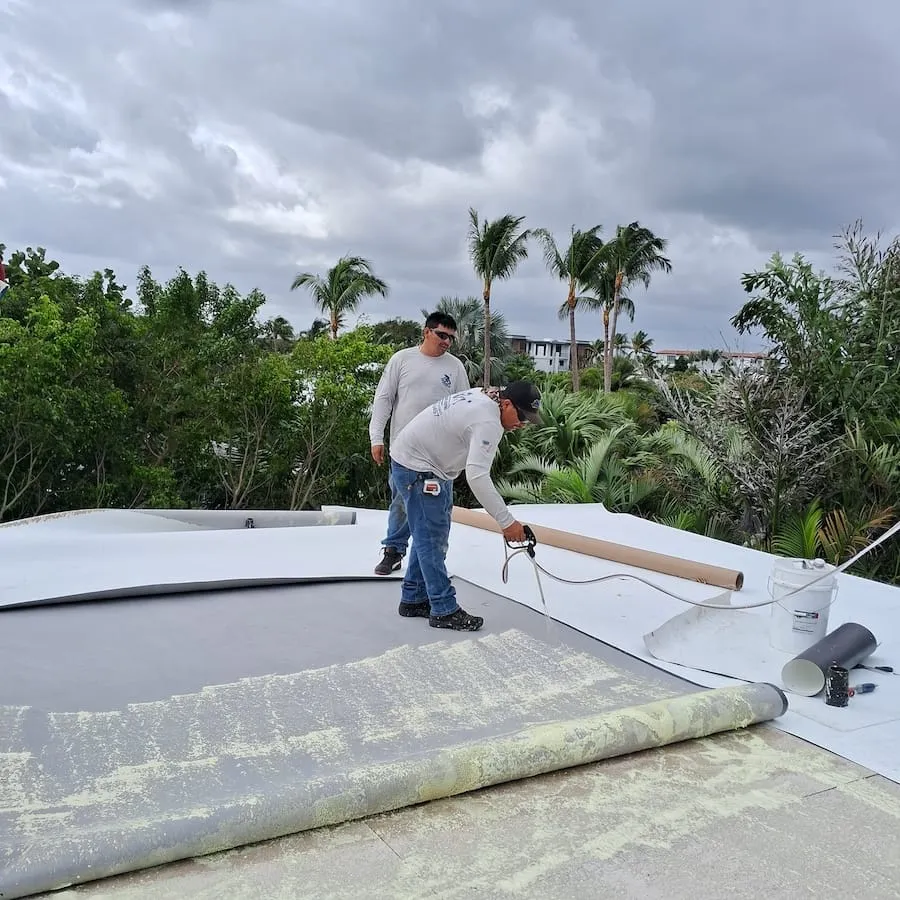
Now that you know what type of flat roof you have and you’ve tracked down the source of the leak, the next step is choosing the right product to patch that specific area. Below is a list of proven products we use when repairing each type of roofing system, whether it’s thermoplastic polyolefin, modified bitumen, built-up, PVC, or EPDM. Each section outlines the materials that work best, what to avoid, and the tools you’ll want to have on hand to prepare for the repair. This gives you a clear idea of your options before you start fixing the roof.
TPO Repairs
- Use: Specific patches or self-adhered tape such as Firestone QuickSeam or Carlisle SureWeld Tape.
- Avoid: Asphalt or solvent-based cements that can degrade thermoplastic polyolefin.
- Tools: Hot-air welder, seam roller, and cleaner or primer.
- Typical Fixes: Punctures, seam splits, or small tears.
- Pro Tip: Always clean the roof surface and apply primer before welding or using tape for a strong bond.
Modified Bitumen (Mod Bit) Repairs
-
Use: GAF Matrix 103 Asphalt for cracks or blisters. GE Silicone Roof Coating or GacoRoof works well for sealing and protecting older Mod Bit systems.
-
Avoid: Acrylic coatings or thermoplastic polyolefin tape, which do not adhere properly.
-
Tools: Trowel or brush for mastics, roller for coatings.
-
Typical Fixes: Surface cracks, degraded seams, or UV wear.
-
Pro Tip: A silicone coating can seal small surface cracks and extend the service life without needing a full roof replacement.
Built-Up Roofing Repairs
- Use: Asphalt mastic with reinforcing mesh such as Henry 208R or Tropical 501, or single-ply compatible patching tape like EternaBond RoofSeal.
- Avoid: Solvent-heavy sealants during hot weather.
- Tools: Trowel, brush, or roller.
- Typical Fixes: Splits, blisters, or exposed seams.
- Pro Tip: Apply an aluminum or silicone coating over repaired areas for added UV protection.
PVC Membrane Roofing
- Use: PVC-specific patching tape or weldable patching such as Carlisle SureSeal PVC Tape or GAF EverGuard PVC Patches. Hot-air welding is preferred for permanent repairs.
- Avoid: Asphalt-based products, solvent cements, or thermoplastic polyolefin tapes, as they can chemically react with or fail to bond to PVC
- Tools: Hot-air welder, seam roller, PVC primer/cleaner.
- Typical Fixes: Seam separations, punctures, or small membrane tears.
- Pro Tip: Always lightly abrade and clean the area with manufacturer-approved PVC cleaner before applying primer and patchwork to ensure optimal weld strength and longevity.
Coating System Repairs
- Use: Recoat with the same formula, such as GacoRoof Silicone for silicone roofs or Tropical 924 for acrylics.
- Avoid: Applying acrylic over silicone since it will not bond properly.
- Tools: Roller or brush.
- Typical Fixes: Small cracks, coating touch-ups, or areas of ponding.
EPDM Membrane Roofing
- Use: EPDM primer with patching tape such as Firestone QuickSeam Splice Tape or EternaBond Rubber Roof Tape.
- Avoid: Asphalt or oil-based sealants that can damage the rubber membrane.
- Tools: Scrub pad, roller, primer, and scissors.
- Typical Fixes: Punctures, open seams, or minor shrinkage.
- Pro Tip: Only seal dry, clean surfaces since trapped moisture causes bubbling and early failure.
Metal Roof Repairs
- Use: Butyl tape-backed metal patching kits (e.g., Mule-Hide Metal Roof Patches), elastomeric sealants like NP-1 or Henry 209, or matching standing seam metal clips for fastener repairs. For corrosion, use rust-inhibiting primer followed by acrylic or silicone-based coatings (e.g., GacoRoof MetalShield).
- Avoid: Asphalt-based cements or non-flexible sealants. They crack under thermal movement and lose adhesion on smooth metal.
- Tools: Wire brush, caulk gun, rivet gun (for mechanical patches), roller or brush for coatings.
- Typical Fixes: Loose or missing fasteners, seam leaks, rust spots, damaged flashings, or minor panel dents.
- Pro Tip: On standing seam roofs, never drill through seams. Instead, use seam clamps or clip-mounted patches to preserve structural integrity and avoid voiding warranties.
Common Mistakes to Avoid
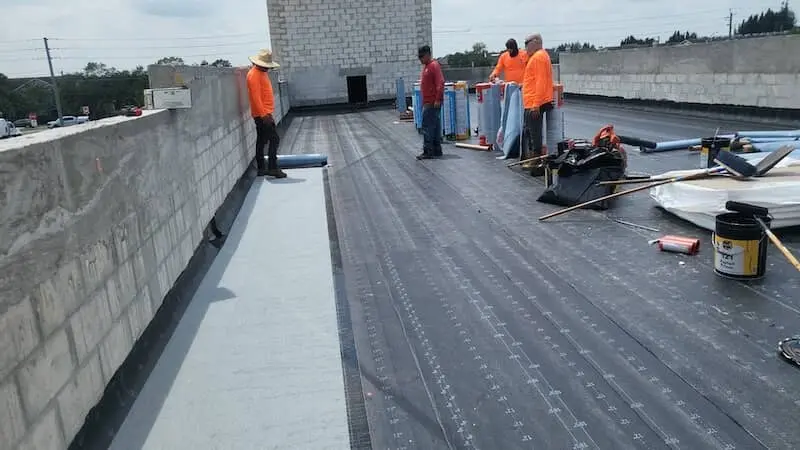
Over the years, we have seen a lot of flat roof repairs fail simply because the wrong product or method was used. Many of these mistakes look small at first but end up causing bigger leaks later. The list below highlights the most common issues we come across so you can avoid them from the start.
- Using roof cement, also called bull, for everything. It is a cheap fix that might last four to five years if applied correctly, but it will eventually dry out and crack under the Florida sun.
- Mixing materials. Using thermoplastic polyolefin tape on built-up or silicone over acrylic leads to peeling and leaks.
- Patching over wet insulation. Moisture trapped under patches creates larger problems.
- Ignoring flashing. Most leaks start at transitions such as vents, drains, or walls.
- Skipping surface cleaning. Even the best maintenance product will fail if dirt or debris prevents proper adhesion.
Frequently Asked Questions About Flat Roof Repairs
Understanding flat roof repairs can be confusing, especially when each roof material reacts differently to Florida’s heat, humidity, and storms. These answers help clarify what works, what doesn’t, and how long repairs should last so homeowners can make more confident decisions.
What Are the Best Materials for a Repair?
The best material depends on the roof system you already have. TPO requires TPO-specific patches or weldable membrane, PVC must be repaired with PVC products, and EPDM needs rubber-compatible primers and tapes. Silicone works well on silicone-coated roofs, while asphalt mastics are best for built-up or Mod Bit roofing. Using the wrong product almost always leads to peeling, poor adhesion, and recurring leaks.
Can a Silicone Coating Stop a Leak?
Yes, silicone can stop certain types of leaks, but only when the roof is dry, structurally sound, and properly prepped. Silicone works best for sealing small cracks, worn surfaces, ponding areas, and weathered Mod Bit or built-up roofs. It will not seal active leaks caused by open seams, wet insulation, or failing flashing. Those issues must be repaired before coating.
Can You Use Flex Seal?
Flex Seal may stop a drip for a few days, but it is not a long-term roofing material. It breaks down quickly in Florida’s UV heat, does not bond well to single-ply membranes like TPO, PVC, or EPDM, and often traps moisture under the patch. Homeowners usually end up with a bigger leak once it releases, which is why we don’t recommend it. Professional-grade materials are always the better option.
How Long Do Flat Roof Repairs Last?
Minor repairs can last anywhere from 2 to 10 years depending on the material and the overall condition of the roof. If the repairs are done incorrectly or the surrounding membrane is old and already failing, the leak can return much sooner. When you follow the manufacturer’s instructions and use the right repair method for the roof type, you can usually expect the fix to hold for a solid amount of time.
Is Patching Worth It?
Patching is worth it when leaks are small and isolated, and the roof is still structurally sound. It’s not worth it when the roof has widespread soft spots, multiple leaks returning in the same areas, trapped moisture, or aging materials nearing the end of their lifespan. In those cases, a restoration coating or replacement usually saves more money long-term.
Get Expert Help Choosing the Right Material
Flat roof repairs demand the right material, the right method, and the right diagnosis. At All Pro Builders & Roofing, we have more than 20 years of hands-on experience working with TPO, PVC, Mod Bit, BUR, EPDM, and coated systems throughout South Florida. Our team knows how each option behaves in heat, humidity, storms, and ponding conditions, and we use that knowledge to recommend repairs that maintain weather resistance and energy efficiency.
If you want a long-term solution instead of another temporary fix, schedule a free flat roof inspection with our roofers. We will identify your roof type, locate the true source of the leak, and select the correct repair materials to restore your roof safely and affordably. We’ve got you covered, from installation, repairs, and replacements.