
Flat Roof Problems From Poor Maintenance
A flat roof can last for decades, but poor maintenance is the fastest way to shorten its lifespan. Florida’s heat, humidity, and heavy rains wear down even the best systems. Regular inspections and proper care are the only ways to catch roof issues before they turn into roof leaks or structural damage.
Why Maintenance Matters in Florida
Flat roofs in Florida face more punishment than most. Constant sun exposure, daily heat expansion, and heavy rain test every seam and drain. Even small maintenance mistakes, like leaving debris around drains or ignoring cracked coatings, allow water to find its way in.
Maintenance before hurricane season is critical for flat roofs. Once storms begin, there’s no time to correct draining issues or seal open seams. A blocked scupper or failing pitch pocket can turn a small leak into a flooded roof deck overnight.

How Flat Roofs Break Down Over Time
Flat roof materials naturally expand and contract with temperature swings. Over time, this weakens seams, breaks down coatings, and causes flashing to pull away from walls or vents. When upkeep is skipped, these small problems compound. Moisture becomes trapped beneath the membrane, insulation softens, and the roof begins to sag or pond water.
Even durable flat roofing systems like TPO, modified bitumen, EPDM, and BUR need regular cleaning and inspection. Without it, clogged drains, unaddressed flashing problems, and neglected coatings lead to widespread damage you can’t always see from above.
Common Flat Roof Issues
Roof Leaks from Pooling Water
Ponding is one of the most visible signs of poor repairs. Water should drain off the roofs within 48 hours after rainfall. When it lingers longer, it means drains are inadequate or the slope is failing.
If water consistently collects in one spot, you may need added insulation or tapered crickets to help the roof shed water properly. Allowing pooling water to remain accelerates deterioration, increases weight stress, and leads to leaks around seams or fasteners.
Debris Buildup from Clogged Drains and Downspouts
It’s common to remove leaves and debris from the surface, but poor maintenance is when downspouts and drain pipes are never cleared out. Water cannot escape if the drain is blocked further down the line. When this happens, debris builds up and causes the roof to hold water even after clearing the surface. You may need to snake the drains or flush out connected pipes to restore flow. Without clear roof drainage paths, a flat roof quickly develop ponding and water intrusion.
Cracked or Worn Coatings
Flat roof coatings protect the membrane from UV exposure and heat. Over time, they dry out and crack, which allows water to seep in. However, simply brushing new coating on top of old material is a mistake.
When a patch or coating is applied without properly cleaning the surface first., dirt, algae, and dust prevent adhesion, causing the patch to peel within months. Before recoating or sealing, the surface must be cleaned and dry to ensure a long-lasting bond.
Seam Separation
Florida’s temperature swings cause constant expansion and contraction, which can pull seams apart. When a patch is placed over just one section of a seam instead of reinforcing the full seam line can lead to bigger issues later.
If one area is coming loose, chances are others nearby are also failing. The proper approach is to clean, reseal, or weld the full seam as needed. When seam separation is caused by poor installation, maintaining the roof means addressing all seams for consistent protection.
Flashing Failures
Flashing seals where the roof meets walls, vents, or curbs. Over time, it cracks, pulls loose, or corrodes. “Touching up” failing flashing with caulk or coating instead of being replaced is poor upkeep.
If flashing is already compromised, patching it only delays the problem. The right approach is to install new flashing where needed and reseal all transitions properly. This prevents a leak from reappearing during the next storm.
Surface Damage from Foot Traffic
Commercial flat roofs often experience foot traffic from HVAC and service technicians. Heavy tools or frequent walking can puncture or compress the roofing surface. Damage from foot traffic must be identified and repaired before a leak spread between layers of the roof.
Vegetation Growth
Vegetation is another sign of long-term moisture issues. Moss or algae trap water against the roofs; surface and clog scuppers or drains. The solution isn’t just cleaning the surface; the draining system must also be checked to prevent regrowth.
The Cost of Poor Maintenance
Skipping basic flat roof maintenance might not seem serious, but it becomes expensive quickly. Small issues like clogged drains, loose seams, cracked coatings, or debris buildup can lead to ponding water and hidden moisture that spreads through insulation.
Insurance providers also pay close attention to signs of neglect. Claims are often denied when there is evidence that drains were not cleaned, flashing was left loose, or seams were never maintained. Keeping up with routine inspections and documenting professional repairs helps protect both your warranty and your insurance coverage. Regular maintenance is one of the most effective ways to extend the life of your flat roof and avoid preventable damage.
Warning Signs You Should Not Ignore
The biggest issues can’t be spotted from the ground. Loose seams, failing pitch pockets, and flashing gaps can only be found by walking the roof and inspecting closely. Waiting until you see visible leaking means the damage has already spread under the surface.
Issues to look for:
- Water stains inside the building
- Ponding water that remains more than 48 hours after rain
- Cracked coatings or exposed seams
- Higher energy bills due to heat gain from membrane damage
How Poor Maintenance Leads to the Wrong Repairs
Poor upkeep doesn’t just mean neglecting the roof; it also means using the wrong repair materials. One of the most common examples is using roof cement, or “bull,” as a fix for leaks. While it may stop a problem temporarily, it rarely lasts more than a few years in Florida’s heat.
Using incompatible materials is another problem. A TPO patch should never be applied to modified bitumen, and a silicone coating won’t adhere to an acrylic surface. Each material requires a compatible repair system. When the wrong product is used, it creates weak points that fail under heat or moisture.
Correct maintenance involves cleaning the surface, identifying the roofing type, and applying the right material for a lasting seal.
What Roofing Maintenance Includes
- Snaking drain lines if they are clogged
- Inspecting seams, flashing, and penetrations
- Recoating worn areas with compatible products
- Replacing failed flashing when necessary
- Checking insulation for moisture and compression
- Documenting repairs and inspection results
Most roofs need inspection twice a year, ideally before and after hurricane season. Routine upkeep identifies issues while they are still manageable and keeps drains flowing.
When Maintenance Isn’t Enough
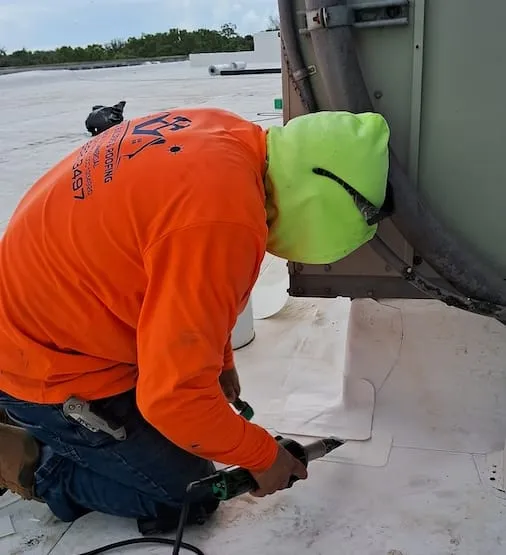
Even with regular maintenance, there comes a point when upkeep alone won’t solve the problem. If you’re dealing with recurring leaks, seam separation, or trapped moisture beneath the surface, it’s time for a professional roof inspection. A certified roofer can tell whether your flat roof can be restored with a coating system or if it needs a partial or full roof replacement.
At All Pro Builders & Roofing, every evaluation is handled by licensed Florida roofing professionals with over 20 years of experience. Our team uses proven diagnostic methods like moisture scans and core samples to uncover hidden issues that surface-level maintenance can’t reveal. By following manufacturer guidelines from GAF, Mule-Hide, and other major roofing systems, we ensure every recommendation meets warranty and Florida Building Code standards.
Protect Your Flat Roof Before Hurricane Season
Hurricane season puts every roof in Florida to the test. Wind, rain, and flying debris find weak points in seams, flashing, and drainage systems. The best time to prepare isn’t after a storm hits—it’s before. Scheduling a maintenance inspection early gives you time to clear drains, reseal seams, and replace flashing before heavy weather arrives.
With decades of experience maintaining commercial and residential flat roofs across South Florida, our technicians know what to look for before a storm does. We check every high-risk area, including drain seals, transitions, and rooftop penetrations, to make sure your roof can handle the next hurricane season.
Schedule a Flat Roof Inspection
If your roof hasn’t been inspected this year, now’s the time to act. All Pro Builders & Roofing offers free, certified flat roof inspections throughout South Florida. Our OSHA-trained technicians follow strict safety and workmanship standards, using the right materials for each roof type – TPO, BUR, modified bitumen, or EPDM.
We go beyond surface fixes by identifying the underlying causes of a leak, drain problems, and premature wear. Every inspection includes a detailed report, photos, and honest recommendations to extend your roof’s lifespan and protect your investment.
Call today to schedule your inspection and keep your roof hurricane-ready with help from one of South Florida’s most trusted roofing teams.